
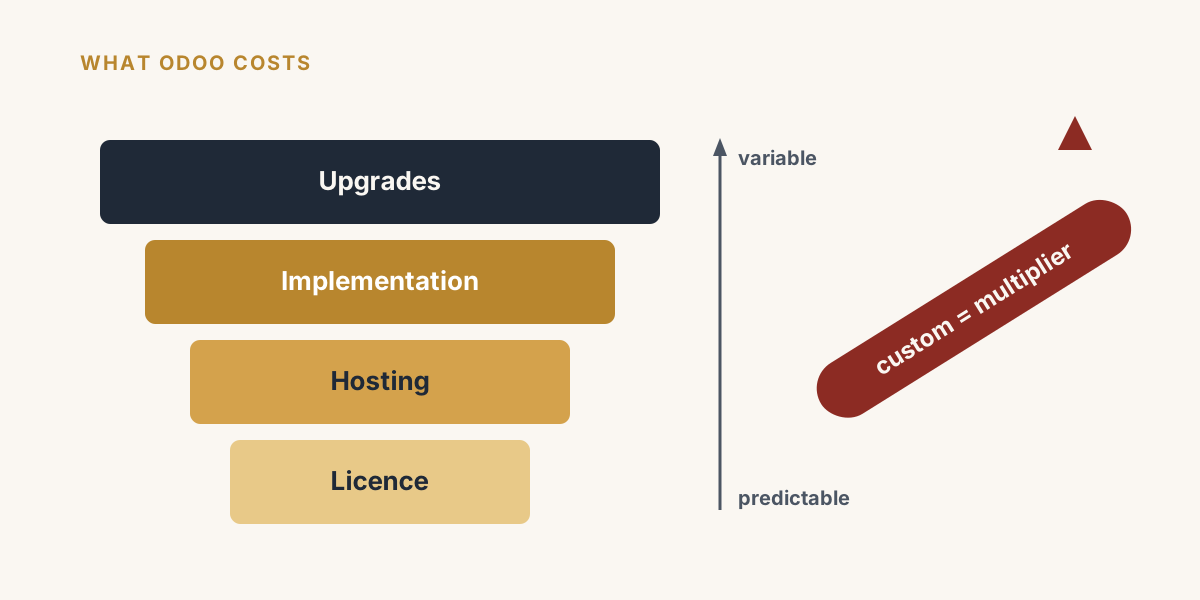
You search "how much does Odoo cost per year", and the first number you find is a licence price per user per month. It looks affordable, so you budget for it. Then the first implementation quote lands and it is a different order of magnitude. A year or two later an upgrade bill arrives that nobody warned you about. The sticker price and the real cost turn out to be two different things.
This is the trap in the question itself. "How much does Odoo cost" quietly means two things: the price of the Odoo software, and the cost of running an Odoo project. The software licence is the small, predictable part. The rest depends on choices you make, above all how much you bend the system to fit your way of working. Here are the four cost layers in plain terms, and the one decision that moves the total more than any other.
Why the price is never one number
Odoo is modular and configurable. That flexibility is exactly why a single price tag does not exist. Two companies of the same size can pay wildly different amounts, not because the licence differs, but because one runs close to the standard and the other rebuilds half of it to match old habits. The licence is a line item. The project is where the money moves. So instead of asking "what does Odoo cost", ask "what will my four layers cost, and how do I keep each one from running away".
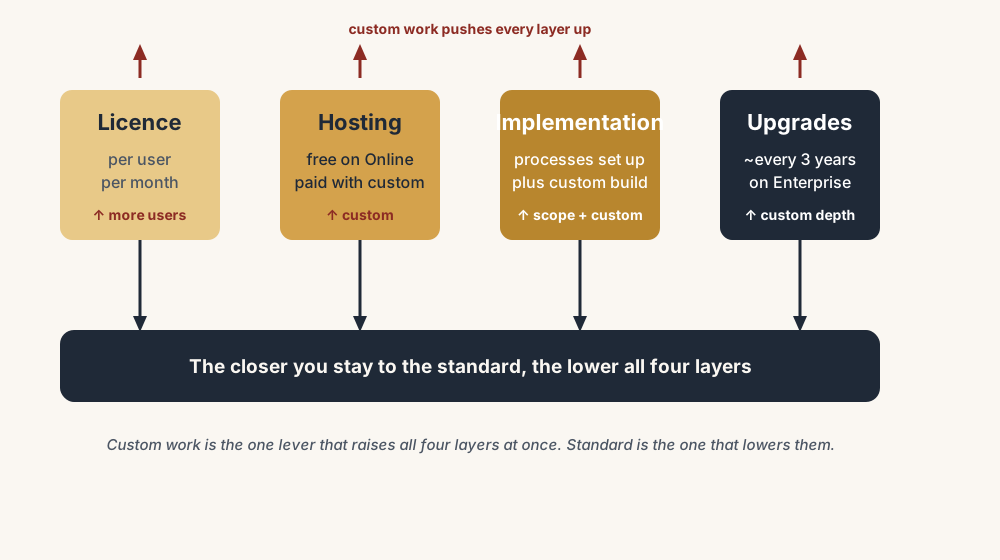
The four cost layers
1. The licence
This is the per-user, per-month fee, and it is the most predictable layer. In the Netherlands the online Standard version starts around €19,90 per user per month in the first year for one company. Note "first year": that opening rate carries a promotional discount that rolls off afterwards, so budget for the standard rate from year two, not the intro price. The Custom tier sits around €29,90 per user per month and adds the Studio app, multiple companies, and API access to connect Odoo to your other systems. There is also a free single-app tier if you genuinely use only one app. Prices are per user, so the licence scales with your headcount, not your revenue.
2. Hosting
If you run standard Odoo Online, hosting is included, so this layer is zero. The moment you add custom development, you need a platform that can run it: Odoo.sh or your own hosting. For smaller installations that runs roughly €50 to €100 per month. It is a modest layer, but it only appears once you leave the pure standard, which is a useful early signal that a project is drifting toward custom.
3. Implementation
This is the most variable layer, and the one that surprises people. A very simple implementation starts around €5.000. Complex projects with heavy custom work and many processes to configure can run to €200.000. The spread is not random: it tracks two things, how many processes you set up, and how much of the system you customise. You can also do it yourself. Plenty of tutorials exist, so the out-of-pocket cost drops, but you pay in time instead, and the total time is almost always more than it looks.
4. Upgrades
The layer most people forget. On the Enterprise version you will typically want to upgrade roughly once every three years. Skip it and you eventually lose support on the older version, or pay extra to keep it. The catch is what drives the cost: the more custom work you have, and the deeper it reaches into core processes, the more expensive every upgrade becomes. On pure standard, an upgrade is usually straightforward. Heavy customisation turns each upgrade into its own project.
Notice the thread running through all four layers: custom work is the multiplier. It shows up as extra apps and build cost in implementation, it forces the hosting layer to exist, and it inflates every future upgrade. The single biggest lever on your total cost of ownership is how close you stay to standard Odoo.
The part that trips people up
A few things catch almost everyone.
The first-year licence price is not the ongoing price. The intro rate is a discount. Budget for the standard rate from year two so the renewal does not surprise you.
Custom work is a recurring tax, not a one-off. A customisation you pay for once in implementation you pay for again at every upgrade, quietly, for as long as you keep it. Cheap to build, expensive to carry.
"Free" Odoo is not free to run. The Community edition and the single-app tier cost nothing in licence, but the value and the cost both live in setting it up well and keeping it running. Free software on a broken process is more expensive than paid software that fits.
Doing it yourself moves the cost, it does not remove it. The tutorials are real and the licence is the same, but the hours add up, usually to more than the quote you were avoiding, and a shaky self-build often gets rebuilt later.
The real comparison is against your current cost, not zero. The honest question is not "what does Odoo cost", it is "what does my current situation cost". The manual re-keying, the stock that does not match, the month-end that takes three days: those are already on your bill, just not on an invoice. One multichannel retailer, for example, spent a lot of hands sorting webshop orders and splitting them across stores by hand every peak season. After that flow moved into one system, its peak-season logistics team went from 4 FTE to 3. At roughly €30.000 to €40.000 per FTE per year, that single change pays back a large part of the annual Odoo cost on its own.
Quick checklist
- Budget all four layers, not just the licence: licence, hosting, implementation, upgrades.
- Use the standard licence rate from year two, not the first-year intro price.
- Treat every piece of custom work as a cost you pay again at each upgrade.
- If you only need standard Odoo Online, your hosting layer is zero. Adding custom brings it back.
- Compare the total against what your current systems and manual work already cost you, not against nothing.
- Push to stay close to standard: it is the one lever that lowers implementation, hosting and upgrade costs at the same time.
When to get a partner
Native Odoo and the online tutorials get a determined team a long way, especially on a simple, standard setup. You can license it, host it online and configure the basics yourself. The hard part is not the software, it is the judgement: deciding which of your processes genuinely need custom work and which are just habit, scoping an implementation so the €5.000 case does not quietly become the €50.000 case, and keeping the build close enough to standard that upgrades stay cheap for years. That judgement is where a partner earns the fee, because the money they save you sits in the layers you cannot see yet.
dooPartners is a worldwide network of independent, Odoo-certified partners. Find one near you who scopes the total cost honestly, keeps you close to the standard where it counts, and stays one point of contact from the first quote through every upgrade.
Find a partner near you
FAQ
How much does Odoo cost per year?
There is no single figure, because Odoo's cost is four layers, not one. The licence in the Netherlands starts around €19,90 per user per month for the Standard online version in the first year and around €29,90 for Custom. Hosting is included on standard Odoo Online and roughly €50 to €100 per month once you add custom development. Implementation runs from about €5.000 for a simple setup to €200.000 for complex, heavily customised projects. Upgrades come roughly every three years and cost more the more custom work you carry. Your yearly total depends mostly on how close you stay to standard Odoo.
Is Odoo free?
Partly. Odoo has a free Community edition and a free single-app tier, so the licence can genuinely be zero. But "free" only covers the software, not the cost of implementing it well and keeping it running. A free edition set up badly, or bent far from the standard, costs more in wasted time and rework than a paid edition that fits your processes. Free is a real starting point, not a free project.
Why is my Odoo upgrade so expensive?
Almost always because of custom work. Standard Odoo upgrades are usually straightforward. Every customisation that reaches into core processes has to be checked and often rebuilt at each upgrade, so the more custom you carry, the more each upgrade costs. This is why staying close to the standard is not just cleaner, it directly lowers your recurring upgrade bill. If upgrades are painful, the customisations are the reason to look at first.
Is it cheaper to implement Odoo myself?
In licence terms it is the same, and the out-of-pocket implementation cost is lower, but you pay in time instead of money, and usually more time than expected. A self-build also tends to drift from the standard, which raises your upgrade costs later. Doing it yourself can work for a simple, standard setup. For anything with real process complexity, the hours and the rework often cost more than a scoped implementation would have.